Maybe you have taken up exercise again, changed your diet, or tried meditation, telling yourself it was a way to prepare for your own old age.
No one has ever told you whether that is enough. The question of how you really prepare for aging remains largely absent, even though everyone asks it one day.
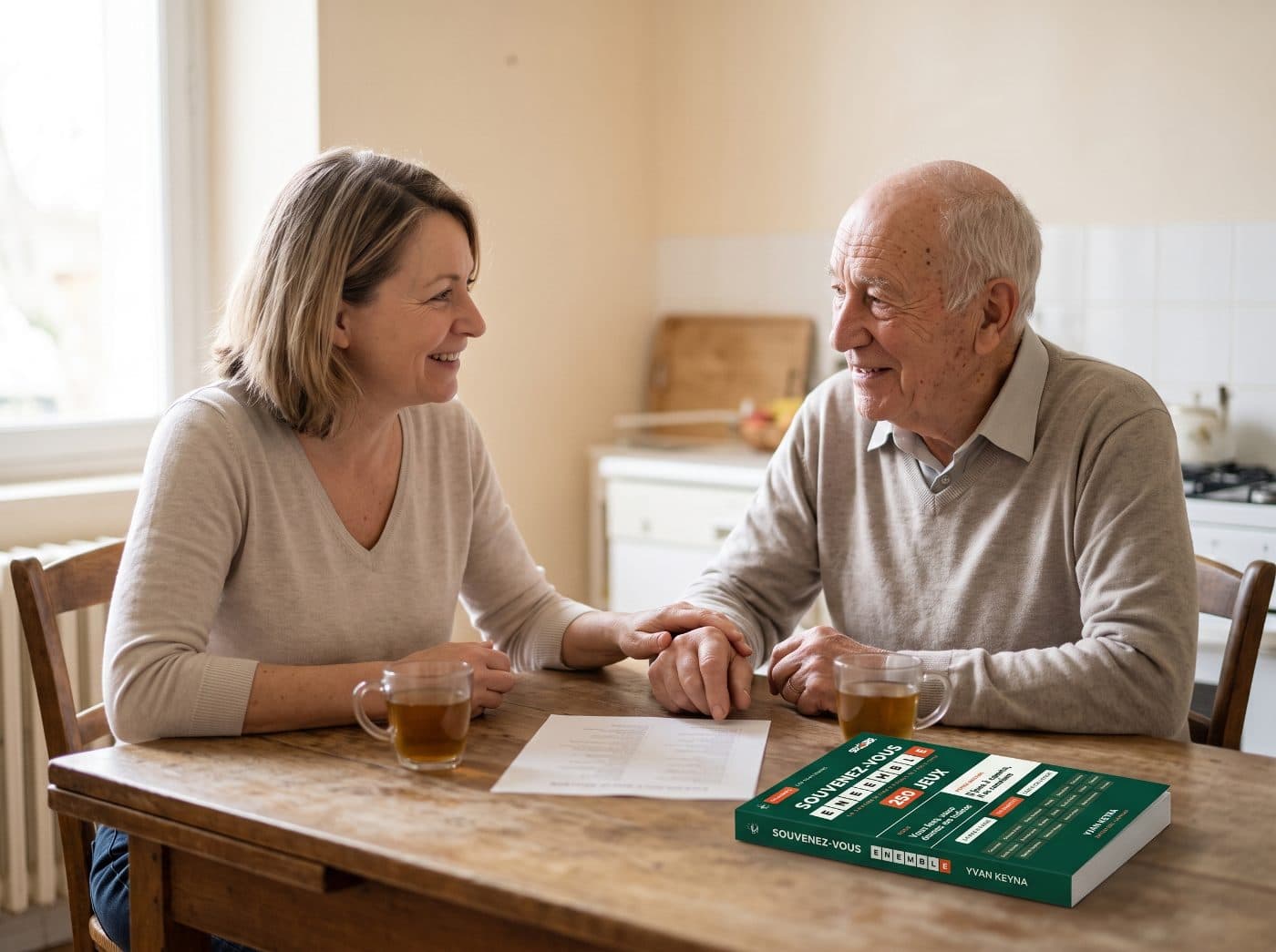
These good resolutions do not prepare anything on their own. The only training that counts is somewhere else, in very concrete terms. That is what I show in my book, Help! Who's Going to Take Care of My Parents?, by Yvan Keyna.
Exercise, diet or meditation do not prepare you for aging: they are useful habits, but they remain theoretical. Real training is lived, not read. It is already there, in your relationship with a parent who is growing older. Looking at it differently changes what it teaches you.

Question 1
No, not on their own. Stretching, organic food, meditation: these have become the automatic answers to the question of aging well. One sentence is enough to break that reflex.
It is blunt: "preparing for aging by stretching, eating organic or meditating in the lotus position in no way guarantees a harmonious old age. It is not enough."
These three habits have one thing in common: they are practiced alone, far from any real encounter with what old age will actually be. Nothing in a stretching class resembles what lies ahead of you.
Question 2
That theory and practice never replace each other, even with the best will in the world. One image says it better than any explanation: someone who learns to swim by only watching videos, then dives into the open sea thinking they have mastered the breaststroke.
"Do you think watching YouTube videos to learn how to swim, without ever getting in the water, works? No, that's ridiculous! If you dive into the open sea for the first time in your life thinking you have mastered the breaststroke, you will quickly be disappointed… and very soon in danger!"
The image makes you smile, and that is intentional. No one would think of learning to swim this way. Yet that is exactly what anyone does who prepares for old age only through personal habits, without ever observing it up close, in someone who is already living it.
Question 3
Something neither exercise nor videos show: two opposite paths, with no connection to whether a life was a success or a failure. The approach is specific: go and see, in person, and listen to what people who have truly grown old have to say.
The book goes further: "visit a specialized care facility and learn about the lives and experiences of the residents."
What you discover there is often surprising: "You will see that some of them succeeded at everything in their lives, and yet they end up there, often alone and without visitors."
On the other hand, parents with whom the relationship was difficult are still supported by their children until their last day. Nothing settles why. The two observations stay side by side, with no ready-made formula to connect them.
The step itself is immediately applicable, without waiting to have a parent in a care facility. It means asking a specific question to someone who has already grown old: what they did with their days, who came to see them, what, looking back, really mattered to them. This is not a courtesy visit. It is about listening.
The book presents this closeness as the surest way to prepare yourself. Not the only possible way, in its view, but the best one.
Question 4
No. The book says it plainly: "This book does not try to make you feel guilty or to suggest that you will only be a good person if you take care of your parent to the very end, even at the cost of sacrificing your life. Absolutely not!"
This training is never an irrevocable duty. One freedom remains whole, written in black and white: "taking care of your parent is never an irrevocable commitment. Give yourself the freedom to change your mind, to reassess your decision."
The book offers a series of questions to ask yourself, not to answer for someone else:
- What responsibility do you really want to take on?
- Do you feel obligated to do it? Is this choice being imposed on you?
- How far are you willing to go? What would you be willing to sacrifice?
- What limits can you set right now?
- Which situations are unacceptable to you?
These are not trick questions. They are reference points, to ask once, so you know where what you choose to give begins and where it ends. Recognizing this freedom does not cancel the training: it continues, simply lighter, freed from the idea that it has to be carried out flawlessly.
Question 5
By no longer filing it away as a burden. There is a different word for what you are already living with a parent who is starting to depend on you: "training". Not to become stronger, but to hold your place in what you do not control.
| What people think prepares you |
What really prepares you |
| Exercise, diet, meditation, practiced alone |
The relationship with a parent who is growing older, lived up close |
| General habits, valid for everyone |
Specific observation, of people who have already grown old |
| A theory you have never tested |
Training that has already begun, without your having chosen it |
| A duty you believe is required from start to finish |
Training freely chosen, with its own limits |
This book gives no method for organizing the practical side of caring for a parent: paperwork, assistance and day-to-day logistics are outside its subject. Nor does it turn you into someone who has already swum: these pages tell you where the water is, they do not put you in it. Only your relationship with your parent can do that.
This idea is in the first chapter of my book Help! Who's Going to Take Care of My Parents?, "When Life Turns Upside Down".
👉 Help! Who's Going to Take Care of My Parents?
You may never know whether exercise or meditation prepared you for aging: that kind of thing cannot be verified in advance. What you are living this week, with a parent who is starting to need you, can be verified right now. The only training available is already underway.
Sources used (1)